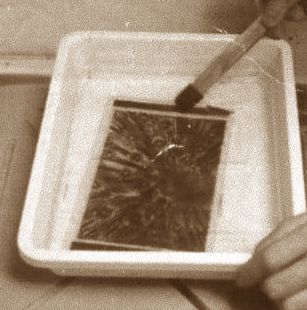
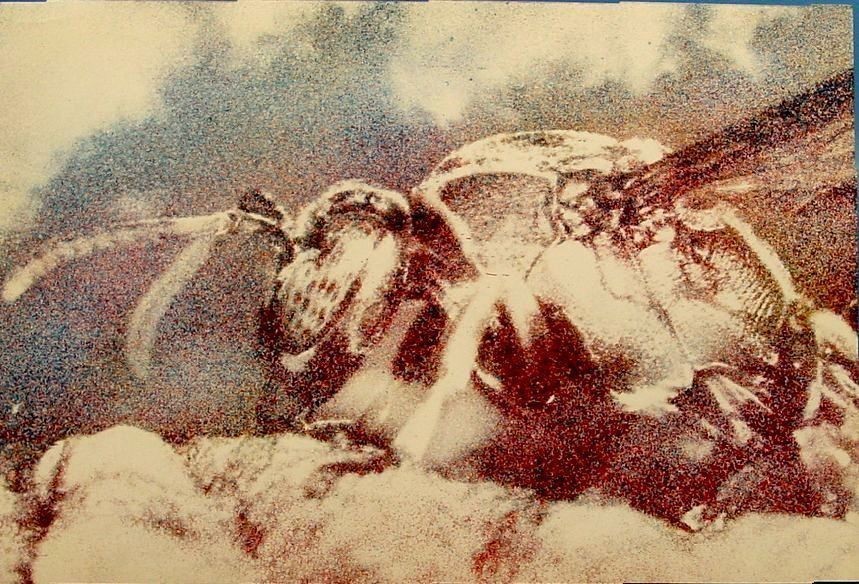
Roughly spray. After drying, overlay the magnifying negative and use the UV exposure machine, Burn. Then wipe with tap water, sponge, etc. An image appears. It is dry and one step is completed. Repeat this process, replacing the pigment with C ・ M ・ Y ・ B. For this print, I used C, M, Y photosensitizers.
Searching for classical photographic techniques ... There are quite a few people in Japan, and there are quite a few foreign countries in Japan. Ww Japan, which comes out with video, has no tradition of making photo prints.
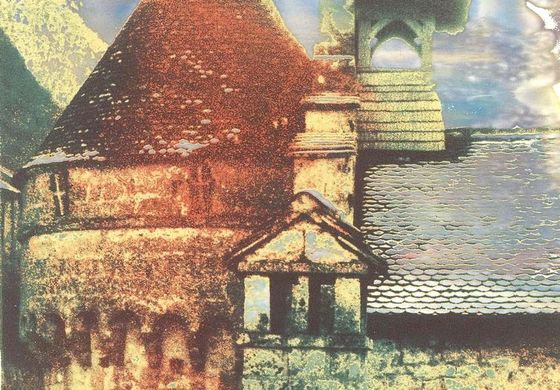
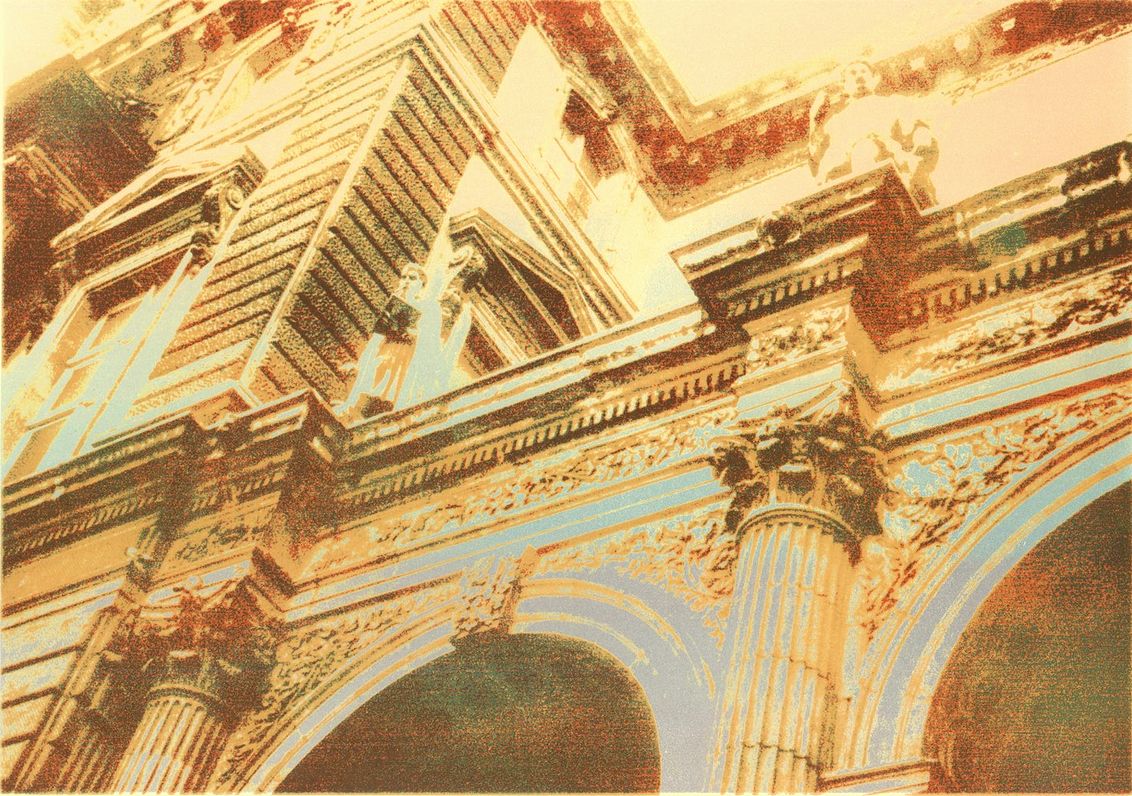
Thank you for {Like}. This photo is like a “coloring page”, printed from a single negative film on a multicolor photo. Apply 4 or more pigment sensitizers on paper and repeat baking and development to complete.
# Is from here, it will be bright indoor work. # Waterproof photographic paper, coating the pigmented photosensitive solution, dried ... # To this, ... I piled the negative film # Sunlight, etc. UV fluorescent lamp, exposure.
Thank you for {Like}. This photo is like a “coloring page”, printed from a single negative film on a multicolor photo. Apply 4 or more pigment sensitizers on paper and repeat baking and development to complete.
# From shooting the film, inverted, creating a positive film ... # From this positive film, make the expanding negative film. # Up to this point, working in a dark room.
# Is from here, it will be bright indoor work. # Waterproof photographic paper, coating the pigmented photosensitive solution, dried ... # To this, ... I piled the negative film # Sunlight, etc. UV fluorescent lamp, exposure.
Thank you for {Like}. This photo is like a “coloring page”, printed from a single negative film on a multicolor photo. Apply 4 or more pigment sensitizers on paper and repeat baking and development to complete.
# From shooting the film, inverted, creating a positive film ... # From this positive film, make the expanding negative film. # Up to this point, working in a dark room.
Thank you for {Like}. This photo is like a “coloring page”, printed from a single negative film on a multicolor photo. Apply 4 or more pigment sensitizers on paper and repeat baking and development to complete.
Pigment photography production is surprisingly . However, as there are many variable elements, like the normal picture, you can not always make the same thing. That's where the interest is divided. This is a photo illustration to the last. It is not computer graphics either. The ultimate goal is the original vintage print.
Vintage photos are mostly monochrome, with very few color prints.
In the case of color, it will be faded after 30 years. Therefore,
I made organic pigments as color formers. Moreover, the dot type will be the world's first.
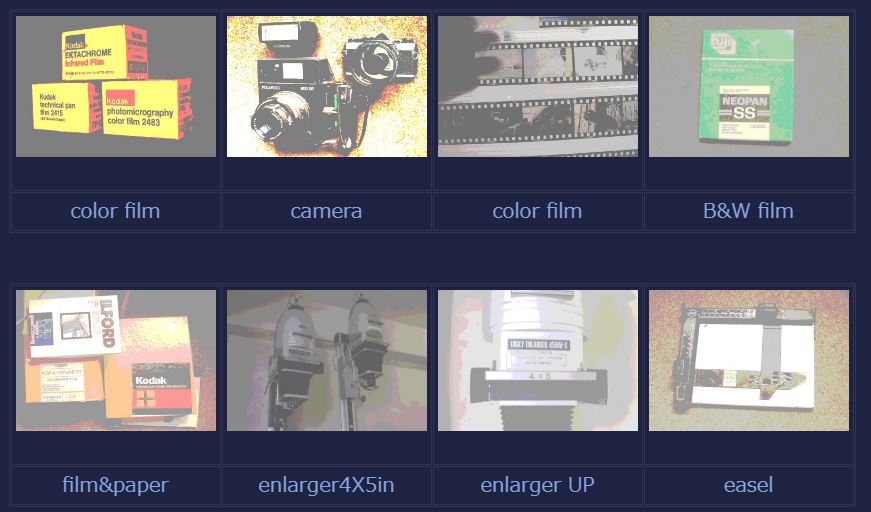
Modern pictures are completed with digital data on the computer. Classical technique photography consists of an amalog camera, film, and finally on paper


 フォトログ表示